University Church of St Mary the Virgin
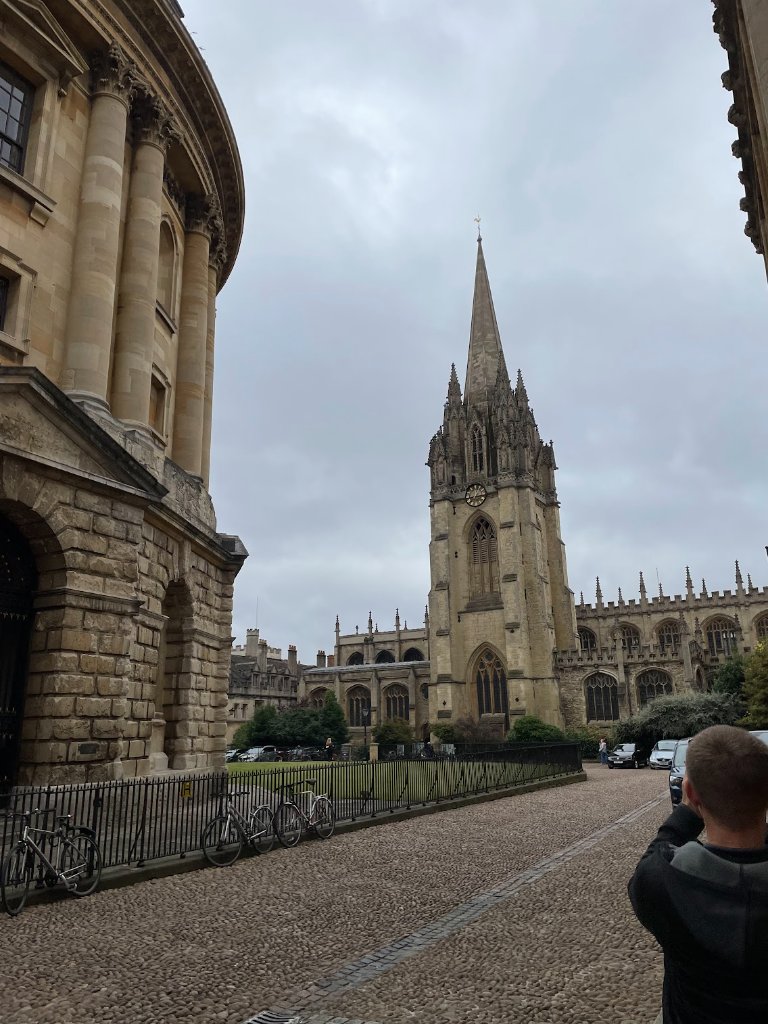
University Church of St Mary the Virgin
High Street, Oxford OX1 4BJ
13th century onwardsThe University Church of St Mary the Virgin, standing on the High Street directly facing the Radcliffe Camera, has been the spiritual heart of the University of Oxford for over 700 years. This is where the three Oxford Martyrs were tried for heresy in 1554–1556 — the dramatic theological disputations that sealed their fate took place in a church packed with spectators. It was also here that Cranmer made his extraordinary final stand, revoking his forced recantations before being dragged out to be burned. Centuries later, the same pulpit was occupied by John Henry Newman, leader of the Oxford Movement, whose sermons from 1828 to 1843 transformed Anglican theology and eventually led him to Rome. John Wesley also preached here in 1744. The church's role as a crucible for the most consequential moments in English Christianity makes it arguably the most historically significant church building in Oxford.
Key Figures
Free to enter. Tower climb approximately £6.
Mon–Sat 9:30am–5pm, Sun 12pm–5pm (extended to 6pm in July/August). Check for service times.
On the High Street, directly facing the Radcliffe Camera. The Vaults & Garden café is accessed from Radcliffe Square — one of Oxford's best lunch spots. Fully accessible on the ground floor; tower involves a narrow spiral staircase.
The tower offers arguably the best panoramic view in Oxford, looking directly down onto the Radcliffe Camera. No booking needed. Check for choral evensong — the musical tradition here is exceptional.
Hours and prices may vary. Please check directly with the venue before visiting.
Hidden Gem
Look for the twisted barley-sugar columns on the church's ornate south porch, facing the High Street. These were added in 1637 by Dr Morgan Owen — and became a point of controversy during the English Civil War. The Baroque, almost Roman Catholic, appearance of the porch was used as evidence against Archbishop Laud at his trial. The Virgin Mary statue in the niche above was defaced by Puritans. It is one of the most photographed architectural details in Oxford, and most people walk past without knowing it was once evidence in a treason trial.
Community Insights
No community contributions yet.
Be the first to share your knowledge!

